This is equivalent to apachectl -k start.stopStops the Apache httpd daemon. This is equivalent toapachectl -k stop.restartRestarts the Apache httpd daemon. This command automatically checks the configuration files as in configtest before initiating the restart to make sure the daemon doesn't die. This is equivalent to apachectl -k restart.fullstatusDisplays a full status report from mod_status.

For this to work, you need to have mod_status enabled on your server and a text-based browser such as lynxavailable on your system. The URL used to access the status report can be set by editing the STATUSURL variable in the script.statusDisplays a brief status report. Similar to thefullstatus option, except that the list of requests currently being served is omitted.gracefulGracefully restarts the Apache httpd daemon. This differs from a normal restart in that currently open connections are not aborted. A side effect is that old log files will not be closed immediately.

This means that if used in a log rotation script, a substantial delay may be necessary to ensure that the old log files are closed before processing them. This command automatically checks the configuration files as in configtest before initiating the restart to make sure Apache doesn't die. This is equivalent toapachectl -k graceful.graceful-stopGracefully stops the Apache httpd daemon. This differs from a normal stop in that currently open connections are not aborted. This is equivalent to apachectl -k graceful-stop.configtestRun a configuration file syntax test. It parses the configuration files and either reports Syntax Okor detailed information about the particular syntax error.

This is equivalent to apachectl -t.The following option was available in earlier versions but has been removed. By default, the server writes the transfer log to the file /var/log/apache2/access.log. You may also specify the file to which errors are logged, via the ErrorLog directive, whose default is /var/log/apache2/error.log. These are kept separate from the transfer logs to aid in troubleshooting problems with your Apache2 server. You may also specify the LogLevel (the default value is "warn") and the LogFormat (see /etc/apache2/apache2.conf for the default value). SELinux is configured to work with the default Apache configuration.

Since you set up a custom log directory in the virtual hosts configuration file, you will receive an error if you attempt to start the Apache service. To resolve this, you need to update the SELinux policies to allow Apache to write to the necessary files. SELinux brings heightened security to your CentOS 7 environment, therefore it is not recommended to completely disable the kernel module.
If you have activated external modules manually, make sure to load their configuration files in all virtual host configurations. Configuration files for external modules are located under /etc/apache2/conf.d/ and are loaded in /etc/apache2/default-server.conf by default. For more fine-grained control you can comment out the inclusion in /etc/apache2/default-server.conf and add it to specific virtual hosts only. See /etc/apache2/vhosts.d/vhost.template for examples.

To list all existing virtual hosts, use the command apache2ctl -S. This outputs a list showing the default server and all virtual hosts together with their IP addresses and listening ports. Furthermore, the list also contains an entry for each virtual host showing its location in the configuration files. Autoindex generates directory listings when no index file (for example, index.html) is present. However, directory listings are disabled by default via the Options directive—overwrite this setting in your virtual host configuration. The default configuration file for this module is located at /etc/apache2/mod_autoindex-defaults.conf.
Before you can derive value from reading a log file, you need to understand the format that is being used for each of its entries. The CustomLog directive is what controls the location and format of the Apache access log file. This directive can be placed in the server configuration file (/etc/apache2/apache2.conf) or in your virtual host entry. Note that defining the same CustomLog directive in both files may cause problems. Apache server logs can be found in the directory//html with custom.log and error.log,respectfully being the default access and error names given. This can be changed to other names in your virtual host configuration file in the future.

By default it is not possible to run multiple SSL-enabled virtual hosts on a server with only one IP address. Name-based virtual hosting requires that Apache knows which server name has been requested. The problem with SSL connections is, that such a request can only be read after the SSL connection has already been established . As a result, users will receive a warning message stating that the certificate does not match the server name. These configuration files can be included into your virtual host configuration where needed.

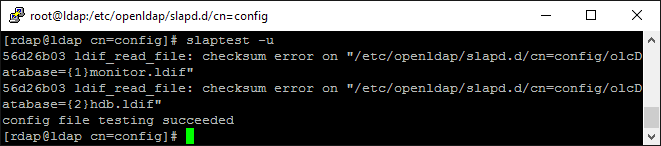
By doing so, you can provide different module sets for different virtual hosts. When starting the service fails giving errors referring to files located in either /etc/apache2 or /etc/httpd/, the system had trouble reading the service configuration files. Apache2 comes with some handy tools for file integrity and syntax checks that can help in locating any typing mistakes or other irregularities in the configuration. With Debian and Ubuntu servers, check the config files by running the following command. The server error log contains information about any errors that the web server encountered while processing incoming requests as well as other diagnostic information. You can choose where the error messages will be transported to using the ErrorLog directive in your virtual host configuration file.
This transport is usually a log file on the filesystem. So far, we have your site directory and basic web page to test the virtual host. Next, we want to create the virtual host configuration files. Virtual host files specify the configurations of the various sites you want to host on a single Apache server. They direct the set domain name requests to its specific directory.

Traditionally, the most common way for applications to log their data is with files. Files are easy to search on a single machine, but don't scale well with more servers. With rsyslog, you can monitor files for changes and import new events into syslog, where you can then forward the logs to a centralized server. To enable the module, create a new configuration file in /etc/rsyslog.d/, then add a file input like this. Every configuration option in this file is extensively documented and therefore not mentioned here. For a general-purpose Web server, the settings in /etc/sysconfig/apache2 should be sufficient for any configuration needs.
On Debian and Ubuntu machines have a virtual host file by default and it is stored in /etc/apache2/sites-enabled/. The ServerName directive is optional and specifies what FQDN your site should answer to. The default virtual host has no ServerName directive specified, so it will respond to all requests that do not match a ServerName directive in another virtual host. Add this directive to the new virtual host file you created earlier (/etc/apache2/sites-available/mynewsite.conf). Apache2 ships with a virtual-host-friendly default configuration.

To modify the default virtual host, edit the file /etc/apache2/sites-available/000-default.conf. In addition to the logs that Linux creates by default, it's also a good idea to centralize logs from important applications. Almost all Linux-based server applications write their status information in separate, dedicated log files. This includes database products like PostgreSQL or MySQL, web servers like Nginx or Apache, firewalls, print and file sharing services, directory and DNS servers, and so on.

It is recommended to always create a virtual host configuration file, even if your Web server only hosts one domain. For the same reason, you should also create separate configuration files for each virtual host. Out of the box, SELinux will work with the default Apache configuration. However, with the custom virtual host that you created, including a custom log directory, a service error will be thrown when you try to restart the Apache service. The solution is to modify the SELinux policies to allow the Apache service to write to necessary files.
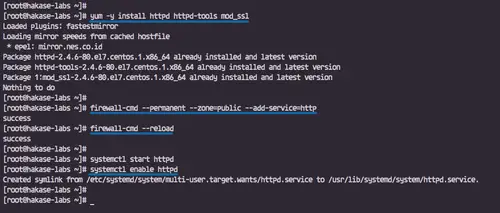
The "-t" runs a syntax test for configuration files only. If that fails, the && prevents the next command from running. The next command, 'apache2ctl graceful' will restart the httpd service in a way that won't disconnect existing connections . For example, consider the default logging behavior of PostgreSQL. Logs are stored in /var/log/postgresql, and each file starts with postgresql- followed by the date. Files are rotated daily, and older files are appended with a number based on when they were rotated.

Each log line can be prefixed with fields such as the current timestamp, current user, database name, session ID, and transaction ID. You can change these settings by editing PostgreSQL's configuration file (/etc/postgresql/11/main/postgresql.conf on Debian). Here's a more advanced example for monitoring an apache web-server listening on the default port number for HTTP and HTTPS. In this example Monit will restart apache if it's not accepting connections at the port numbers. The method Monit use for restart is to first execute the stop-program, then wait for the process to stop and then execute the start-program and wait for it to start.

The length of start or stop wait can be overridden using the 'timeout' option. If Monit was unable to stop or start the service a failed alert message will be sent if you have requested alert messages to be sent. When everything on the service side is working as expected and you cannot find a fault, but the website just still won't load, it's always a good time to dig through logs. You can find the logs stored at /var/log/apache2/ or /var/log/httpd depending on your choice of Linux distribution. You can list all files in your web server's log directory using the commands below. SELinux policy defines how processes running in confined domains interact with files, other processes, and the system in general.

Files must be labeled correctly to allow httpd access to them. For example, httpd can read files labeled with the httpd_sys_content_t type, but cannot write to them, even if Linux permissions allow write access. In the virtual host configuration file, you can also control the level of messages that will be entered into the error log through the LogLevel directive. When you specify a particular value, messages from all other levels of higher severity will be logged as well. For example, when LogLevel error is specified, messages with a severity of crit, alert, and emerg will also be logged. Individually setting SELinux permissions for the /var//log directory will give you more control over your Apache policies, but may also require more maintenance.

Since this option is not universally setting policies, you will need to manually set the context type for any new log directories specified in your virtual host configurations. The installation script requires root or sudo privileges to install and use Docker. If you want to grant non-root users access to Docker, refer to thepost-installation steps for Linux. Docker can also be installed without root privileges, or configured to run in rootless mode. For instructions on running Docker in rootless mode, refer torun the Docker daemon as a non-root user .
Configuration files for the modules that are installed by default. Refer to Section 38.4, "Installing, Activating, and Configuring Modules" for details. Note that configuration files for optional modules reside in the directory conf.d. Monit is controlled via an easy to configure control file based on a free-format, token-oriented syntax.
Monit logs to syslog or to its own log file and notifies you about error conditions via customisable alert messages. Monit can perform various TCP/IP network checks, protocol checks and can utilise SSL for such checks. Monit provides a HTTP interface and you may use a browser to access the Monit program. CentOS and httpd do not have the same virtual host file set by default but instead uses the httpd service configuration to store the default settings. With your site directory and sample index file in place, you are almost ready to create the virtual host files. Virtual host files specify the configuration of your separate sites and tell the Apache web server how to respond to various domain requests.

Apache on CentOS 7 has one server block enabled by default that is configured to serve documents from the /var/ directory. While this works well for a single site, it can become unwieldy if you are hosting multiple sites. SSL enabled for Apache It is strongly recommended to have the Apache SSL module enabled and configured to support HTTPS.

By default the Shibboleth messages containing user attributes are encrypted. Therefore, they can also be sent via the insecure HTTP protocol. However, any session-based access to a web page via the insecure HTTP is prone to session hijacking attacks.

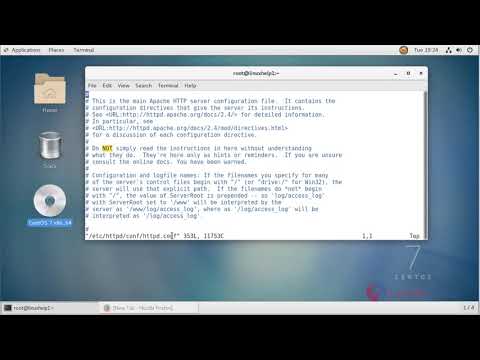
SSL enabled for Microsoft IIS The IIS website should have an appropriate x509 certificate installed and SSL enabled. Before continuing to the next section, please ensure that the requirements above are met on the system where the Shibboleth Service Provider will be installed. The next step is to set up the web server configuration for the domain. The configuration files name is httpd.conf, and the Apache configuration directory location is /etc/httpd/.

/var/log/apache2/ is the default directory for Apache's log files. Although it is not necessary to create separate error log files for each virtual host, it is common practice to do so, because it makes the debugging of errors much easier. Is prepared for one configuration file per virtual host in /etc/apache2/vhosts.d/. All files in this directory with the extension .conf are automatically included to the configuration. A basic template for a virtual host is provided in this directory (vhost.template or vhost-ssl.template for a virtual host with SSL support).

If you made any changes to the configuration files, the service needs to be reloaded for the changes to take an effect. Restarting the service does the job, but if you wish to avoid downtime on your web server use reload instead with one of the following commands. /var/ The reason behind leaving the default directory is so that it gets served when client requests do not match any other sites you configured with virtual hosts.

Moreover, if you would like to disable your created virtual hosts, the default remains to serve traffic. The ServerAdmin directive specifies the email address to be advertised for the server's administrator. The default value is This should be changed to an email address that is delivered to you (if you are the server's administrator).

If your website has a problem, Apache2 will display an error message containing this email address to report the problem to. Find this directive in your site's configuration file in /etc/apache2/sites-available. Now that the /var//log directory is using the httpd_log_t type, you are ready to test your virtual host configuration. Like many Linux services, Apache's functionality can be modified using configuration files and modules. Configuration files should all be stored in the /etc/httpd/ directory.

However, you should update them to get rid of deprecation warnings for legacy configuration elements. Generally, it is recommended to perform a clean configuration as is described in the configuration guide mentioned below. The first thing administrators do after installing an application is to configure it.